I watched 25 dash past my window recently, a somewhat bittersweet milestone to wave at as I craned my neck and time continued on its relentless drive forward. Accompanying this passing was the uninvited-yet-not-unwelcome arrival of a new vantage point—one from which the word ‘friend’ has begun to blur and take on an unfamiliar form (and no, I’m not experiencing age-related vision loss). Friendship has become a tense issue for me. Not tense as in intense, worrisome or stressful, but more so a matter of grammatical chronology.
Judging from the excerpts I read during my regular perusal of social media, I know grammar isn’t one of those things people like to use, let alone discuss in day-to-day conversation, but do bear with me for just a moment. I don’t remember spending a huge amount of time learning grammar in English class at school; formal grammar was something I only truly picked up from learning other languages. When we think about tenses in English, I assume most of us would safely say there are three—past, present, and future tense. In the context of friendships, I would apply these tenses to the verb “to know”; that is: I knew, I know, and I will know.
Until recently, friends had primarily existed in the present tense for me. Obviously, friends were people I had met in the past and expected to see in the future, but my focus was firmly in the present; the day-by-day interactions. I had considerably less concern for where the friendship had come from, where it was headed, and why we were friends. These would fade out-of-focus and I’d concentrate on the simple fact that we were friends. Friends were people who made me laugh until I cried, who sat with me while I cried until I laughed. Friends were people who needed minimal communication to know exactly what I was thinking—people with whom I spoke another language, only known to us.
Obviously, friendships still occupy a large part of my everyday, and I would still use similar criteria to define them, but it’s my focal perspective on the present that has changed. Naturally, the next question is, what replaced this present focus for me? Well, it started with a shift towards the past; surveying all the close friendships I once had that dissipated for some reason or another.
In accounting for how many friendships I once had, regardless of the reasons, I began a novel focus on the future perfect tense: using two auxiliary verbs—will have—and the past participle to describe an action that will be completed at some point in the future. In my mind, friends have shifted from “people I know” to “people I will have known”. People I’ll grow to love and learn the ins and outs of their lives, to one day find that their affections lie elsewhere and that knowledge I stored about the intricacies of their identity has expired. It’s not something I enjoy having to admit—that upon meeting someone new whose company I’m beginning to enjoy, I’m already questioning how long I think a friendship with this person will last. It’s not as though I mentally go around labelling people with metaphorical best-before date stickers, but it has become the realistic-albeit-melancholic query to consider.
I could see why some might take issue with my newfound attitude, but I don’t treat it as an excuse to not invest in friendships or a reason to devalue them. Instead, it’s more a resignation to the nature of people, of friendships and of life. After all, friendships can’t last forever, right? I also don’t intend to assign blame to people I once considered close friends, by any means. I am genuinely grateful I was able to experience what a friendship with those people was like, even if only for a moment. I also can’t help but feel that there’s just no purpose to pointing fingers; eroded friendships are rarely a case of “I stood still while you walked away from me” and much more likely a case of “we both went our separate ways”.
As I was writing this, I couldn’t help but wonder how this applied to my friendship with God (a part of me cringes when writing those words—relationship feels far more appropriate despite the old adage “I am a friend of God” I’ve heard since I can remember). In my life, right now, is God someone I know or is He someone I will have known? If I’m honest, there are definitely times when God feels like someone I used to know intimately; times where I can sense distance between us and I have to question how the friendship faded away. In this case, it is simple. He stood still while I walked away. It conjures up that powerful image Jesus describes in the parable of the Prodigal Son: Out of love God lets me walk away to explore my freedom, earnestly watching from the house and awaiting my return. Any distance in that friendship is entirely determined by me, not by God standing with arms wide open to welcome me home again.
It can sting looking back on friendships that we once treasured. We might gaze at a photo, smile, relive the moment, and then feel regret for allowing the bond to break. Knowing the bond broke because you both took steps in opposite directions helps to alleviate at least some of the pain. As for the friendships where you were (and still are) invested but every step towards them is met with a step further away . . . that’s a sense of gut-wrenching pain unique to abandonment. And if that’s how we feel about relationships with people, can we even fathom how God feels when we turn our back on Him and walk away? Can we imagine how He feels when we distance ourselves from Him, knowing He won’t force us to love Him even though He died to save us?
The choice is ours. Personally, I don’t want God to ever be someone I knew or left in the dust and footprints of my past. God is someone I want to know intimately for the rest of my life and beyond. No distance. No fading.
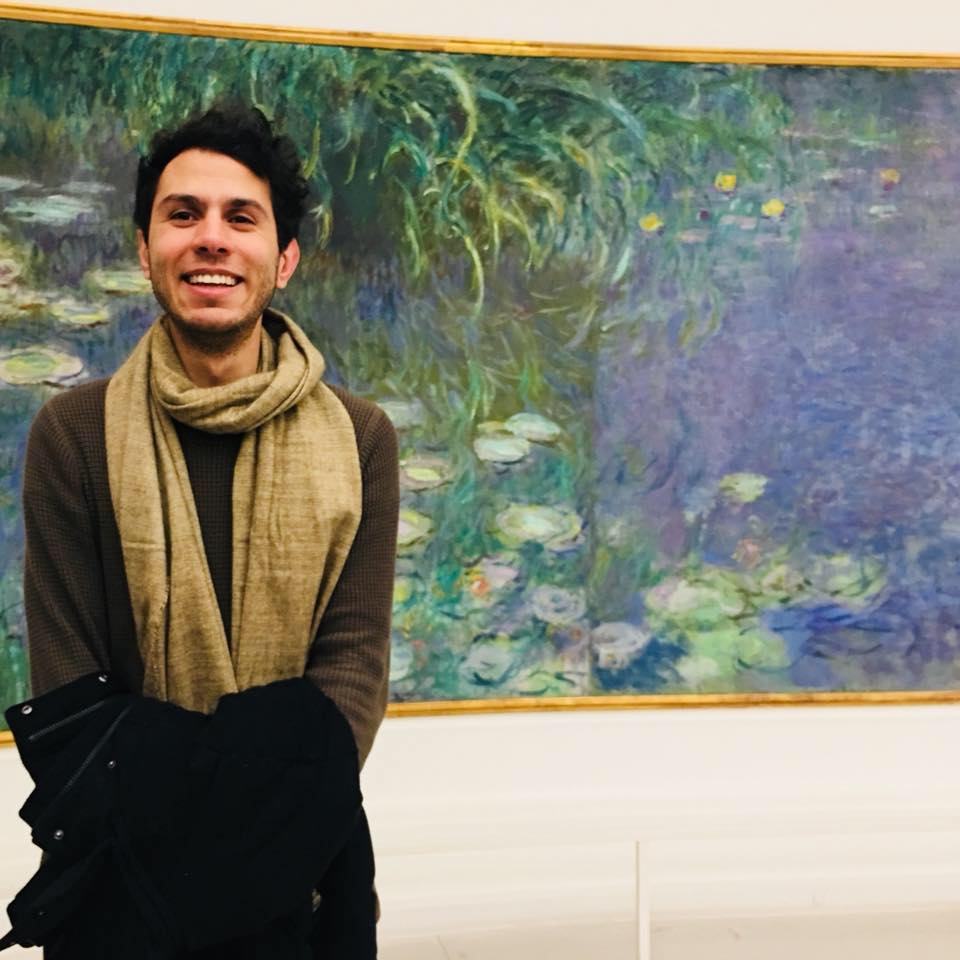
WRITER: Joel Raymond, attends Wahroonga SDA church in Sydney.