I used to have lots of advice on healthy relationships—then I got married. You see the amazing thing about marriage is not just what you learn about your partner, it’s what you learn about yourself. Marriage is actually dangerous. Behind those vows, that dress, those smiles and joyous emotion are the hurt, brokenness and selfishness that two people bring before God and their family and friends. No wonder 42 per cent of Australian marriages end in divorce.1 The reality is that marriage isn’t the problem; it is the quality of health in the relationship. To this day, marriage is still one of the most powerful pictures of God that we can express to the world (Genesis 1:26-28). A healthy relationship between a husband and wife turns the mess of our lives into a message of God’s enduring love, grace and forgiveness.
The raw honesty of the Bible allows us to buy into hope through hurt and pain.
Interestingly, the Bible actually gives descriptions and stories of unhealthy relationships in families and marriages. The raw honesty of the Bible allows us to buy into hope through hurt and pain. Jacob is one character who carried a nation on his shoulders (Israel) yet dragged along some serious baggage in his family and marriages. The story of Jacob allows us to see four (and many more) subtle pictures of how to have an unhealthy relationship (Genesis 27- 34). Here is a quick snapshot.
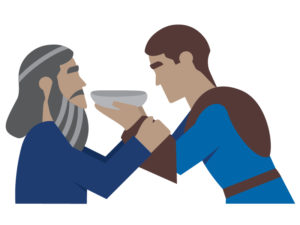
1. Jacob’s manipulation of Esau & Isaac
Read: Genesis 25:19-34; 27:1-46
The rivalry of the twin brothers Jacob and Esau is palpable even though both brothers could not be more opposite. Jacob the cook, Esau the hunter and of course that bowl of “nutmeat” stew. What is clear in the story is that Jacob knew what he wanted, the birthright; and Esau knew what he needed, the stew. Jacob waits for vulnerability to manipulate the situation. Unhealthy relationships look for vulnerability as the playground for manipulation. Manipulation is turning someone’s situation/problem/feeling in a direction for your gain. It is subtle, but it can cost you a lot. Leviticus 25:17 keeps it simple: “Do not take advantage of each other, but fear your God. I am the Lord your God.”
2. Isaac & Rebekah’s favouritism of their chosen sons.
Read: Genesis 27:1-46
Isaac and Rebekah reveal the problem with favouritism in their family. Favouritism is rarely done publicly. Isaac shares privately with Esau, while Rebekah overhears and privately tells Jacob. The secrecy and favouritism adds fuel to the fire of Jacob and Esau’s combustible relationship. Though often subtle, favouritism can create a whole truckload of problems in all sorts of relationships. Jealousy, exclusivity, gossip all erode trust, which causes people to pick their sides. James 2:1 states clearly, “My brothers and sisters, believers in our glorious Lord Jesus Christ must no show favouritism.”

3.The jealousy between Rachel & Leah
Read: Genesis 29-30:24
The jealousy between Rachel and Leah is toxic. Jacob loves Rachel and he also loves the kids he has with Leah. The jealousy overflows to involve maidservants in a bidding war for children with Jacob. Jealousy always leads to others getting involved and hurt. In Genesis 30:14-15, the jealousy comes to a head when the unspoken becomes spoken. The mandrake plant that Reuben (Leah’s son) finds was considered a great help in conceiving a child. Rachel wants the plant too, but Leah wants her man. It appears that Rachel holds the sex card, and Leah holds the conception card. Jealousy in relationships leads to a withholding pattern. Relationships that have jealousy traits are dangerous, because selfishness and pride are displayed in high definition. Philippians 2:3 says simply that we should “do nothing from rivalry or conceit, but in humility count others more significant than yourselves.”
4. The lack of boundaries and respect from Jacob’s children
Read: Genesis 33:18-34:31
This story emphasises an old saying “two wrongs don’t make a right”. You see, Jacob moves into the wrong neighbourhood and it instantly invites trouble. Jacob’s daughter is raped and Jacob’s sons are angry. In a moment of family crisis, Jacob the leader goes silent. The neglected opportunity to deal with this problem leads to Jacob’s sons taking matters into their own hands. The story reveals the lack of respect Jacob’s sons have for Jacob. Any relationship that tries to move forward without respect or boundaries is destined to fail. 1 Peter 2:17 clearly states: “Show proper respect to everyone, love the family of believers, fear God, honour the emperor.”
No relationship is perfect, so take the opportunity to receive messages from the mess of the stories from the Bible. Learn from your mistakes and grow, knowing that God’s way is always the best and healthiest.

AUTHOR: Lachlan Campbell lives on the Sunshine Coast with his wife Cathy serving as pastor for Landsborough Adventist Church. He can be found surfing, playing touch football or listening to jazz.
ILLUSTRATIONS: These illustrations were created by Jessica Symes. For more of her work, visit <www.jessigned.com.au> or @jessica.symes.photography on Instagram and Facebook.
1.<http://www.abs.gov.au/ausstats/[email protected]/mf/3310.0>