University is finally here and in full swing.
Getting back to the books can be a bit hard especially after months of holidays. Picking up and book and retaining valuable information is like a creaking door in need of some oil. And we are here to help provide that oil.
Before you start studying make sure you have the following things in check:
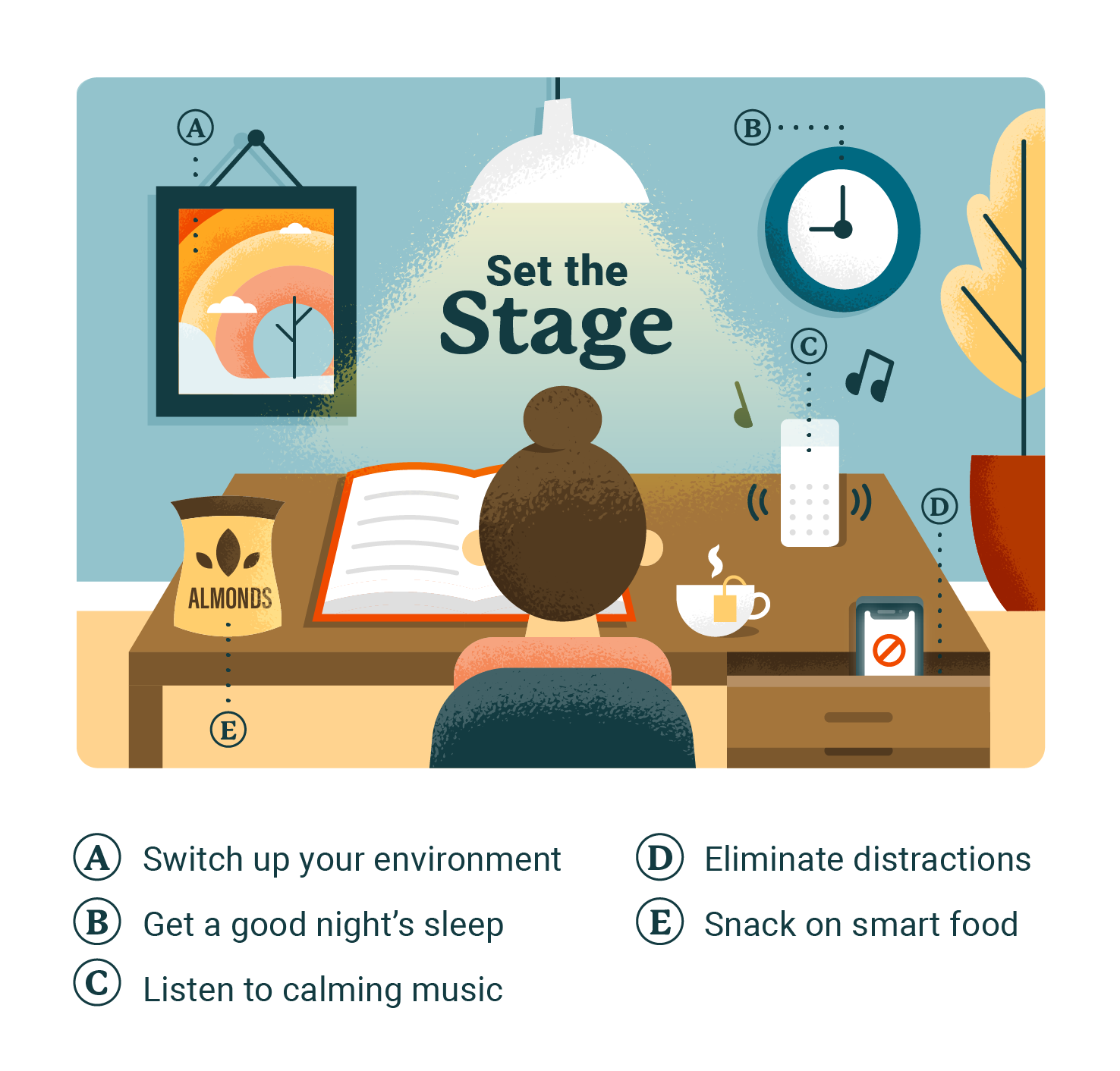
cc: University of St. Augustine
Below are five study techniques that you can put into place to help you study more effectively and efficiently throughout this year.
Retrieval Practice
Based on the concept of remembering at a later time. Recalling an answer to a question improves learning more than looking for the answer in your textbook. Remembering and writing down the answer on a flashcard is even more effective.
If you practice retrieval, you are more likely to remember the information later on. Below are some ways you can implement the retrieval process into your study routine.
Utilize practice tests: Use practice tests or questions to quiz yourself, without looking at your book or notes.
Make your own questions: Be your own teacher and create questions you think would be on a test. If you’re in a study group, encourage others to do the same, and trade questions.
Use flashcards: Create flashcards, but make sure to practice your retrieval technique. Instead of flipping a card over prematurely, write the answer down and then check
Spaced Practice
Spacing out your studying allows your mind to make connections between ideas and build upon the knowledge that can be easily recalled later. Schedule some time each day just for studying and reviewing the material. Even if your exams are months away, this will help you hold yourself accountable.
Day 1: Learn the material in class.
Day 2: Revisit and review.
Day 3: Revisit and review.
After one week: Revisit and review.
After two weeks: Revisit and review
The Feynman Technique
This is an efficient method of learning a concept quickly by explaining it in plain and simple terms. So basically explaining a concept in our own words, making you more likely to understand it a lot faster.
How it works:
- Write the subject/concept you are studying at the top of a sheet of paper.
- Then, explain it in your own words as if you were teaching someone else.
- Review what you wrote and identify any areas where you were wrong. Once you have identified them, go back to your notes or reading material and figure out the correct answer.
- Lastly, if there are any areas in your writing where you used technical terms or complex language, go back and rewrite these sections in simpler terms for someone who doesn’t have the educational background you have.
Colour Coded Notes
A recent study found that colour can improve a person’s memory performance. That same study found that warm colours such as red and yellow “increase attention and elicit excitement and information.”
That being said, here are some tips:
- Write down key points in red.
- Highlight important information in yellow.
- Organize topics by colour.
- Don’t colour everything—just the most important information.
Exercise Before Studying
If you’re struggling to find the motivation to study, consider adding an exercise routine to your day. It doesn’t have to be a full hour at the gym. It can be a 20-minute workout at home or a short walk. Exercising before you study:
Kickstarts brain function and can help improve memory and cognitive performance.
Releases endorphins, which can improve your mood and reduce stress levels.
Hope these techniques help you smash this academic year!
*Original article: https://www.usa.edu/blog/study-techniques/